Learning Before Failure: Why I Wrote The Upside of Downside Thinking
A premortem approach to better decision making, and why it matters for L&D leaders.
By Matt Confer, Chief Strategy Officer at Abilitie
Experience is a powerful teacher. That is a big part of why I’ve always believed so strongly in simulation-based learning. When people have to make a decision, see the consequences, and then reflect on what happened, the learning tends to stick.
A few years ago, I became interested in a question that grew from the experience of simulation in venues all around the world:
What if we could learn from failure before it happens?
That question eventually became the foundation for my book, The Upside of Downside Thinking, published by ATD Press.
What Is a Premortem?
The idea at the center of the book is the premortem, a decision-making exercise you run before a plan launches instead of after it fails.
Before making an important decision, you imagine that the decision has already failed. Not just missed the mark. It failed. And it failed miserably.
Then you ask a simple question: What went wrong?
It sounds almost too simple. But there is something powerful about changing the framing and asking people to actually put themselves in that future. The decision has been made. The project has been launched. Six months have passed. And now you’re sitting together trying to understand how it all went so badly.
That ability to almost viscerally experience failure is important. Because most of the time, we do the exact opposite.
I saw this time and time again when I facilitated our business simulations at Abilitie.
Teams would get together, look at the information in front of them, and start building a plan. And almost immediately, the conversation would gravitate toward success.
Here’s the strategy.
Here’s what we think the competition will do.
Here’s where we’re going to invest.
Here’s how we’re going to win.
That is completely natural. We build plans around what we hope will happen. We talk about goals, milestones, upside, and opportunity. We ask what needs to go right.
And, to be clear, there is nothing wrong with that. Leaders need optimism. You can’t build much of anything if your starting assumption is that every idea is doomed. But optimism has a downside when it becomes the only lens through which we evaluate a decision.
What we are often much less comfortable doing is spending real time considering how the plan could fall apart.
And here’s the interesting part: many of the biggest risks aren’t actually hidden.
Someone thinks the timeline is unrealistic. Someone knows another department isn’t nearly as committed as everyone is assuming. Someone sees a flaw in the strategy but doesn’t want to be the person slowing things down. Someone remembers the last time the organization tried something similar. Someone simply has a bad feeling about one of the assumptions everyone else seems to have accepted.
The information is there. The challenge is getting it into the conversation.
That’s one of the reasons I became so interested in the premortem.
When you ask, “Do you think this plan will work?” you’re asking someone to challenge the plan.
When you ask, “What concerns do you have?” you’re asking someone to volunteer to be the pessimist.
But when you say, “The plan failed miserably. Tell me what happened,” you’ve changed the assignment.
Now everyone is supposed to find the flaws.
The person who questions the timeline isn’t being negative. The person who challenges an assumption isn’t being difficult. The person who points out something the leader missed isn’t rooting for the plan to fail.
Finding the downside is the job. And once those concerns are out in the open, you can actually do something about them.
You can change the timeline. Test the assumption. Talk to the other department. Build a contingency plan. Or decide that the risk is worth taking exactly as planned.
That’s an important distinction. The purpose of a premortem isn’t to convince yourself not to act. It’s to give yourself a chance to strengthen the decision before reality gets a vote.
Why I Think This Matters for L&D
For those of us who work in learning and development, I think there is an interesting challenge here.
We are very good at helping people learn from experience.
We use case studies. Reflection. Coaching. After-action reviews. Simulations. Postmortems.
All of those have enormous value. But most of them help people learn after something has happened.
The premortem asks whether we can also help leaders build the habit of learning before something happens.
Leaders today are making decisions with incomplete information, moving faster, working across more functions, and navigating more uncertainty. In that environment, better judgment becomes a leadership development priority.
Not because leaders need to predict the future. Because they need to get better at asking:
What are we missing?
What would make this fail?
What can we still change now?
That is the skill I became interested in.
The Connection to Experiential Learning
This is also where the idea connects so naturally to the work we do at Abilitie.
In our business simulations, leaders get to experience the consequences of their decisions without putting the real business at risk.
They make the call. They see what happens. They learn.
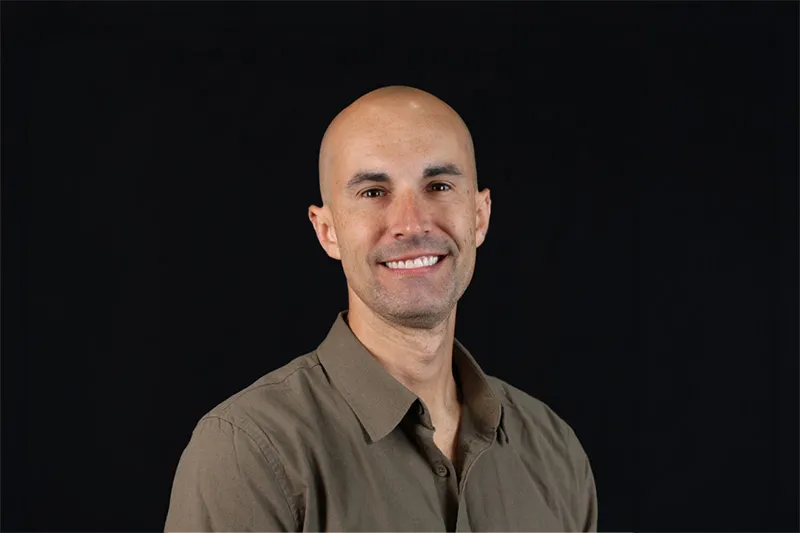
Matthew Confer
Chief Strategy Officer, Abilitie
A premortem is different, but the philosophy is similar. It creates a kind of mental simulation. Instead of waiting for the outcome, you temporarily imagine the outcome has gone badly and work backward from there. You are trying to create learning before the real consequence arrives. That is what I find so compelling about it.
It is not about being pessimistic. It is not about avoiding risk. It is about making risk visible enough that you can do something useful with it.
Why This Became a Book
I started exploring this topic more than six years ago, first through a TEDx talk on decision-making and then through a much deeper dive into psychology, cognitive bias, leadership, and failure.
The more I researched it, the more I came back to the same thought: We spend a lot of time studying failure after the fact. We should get better at learning from it beforehand.
That became the book.
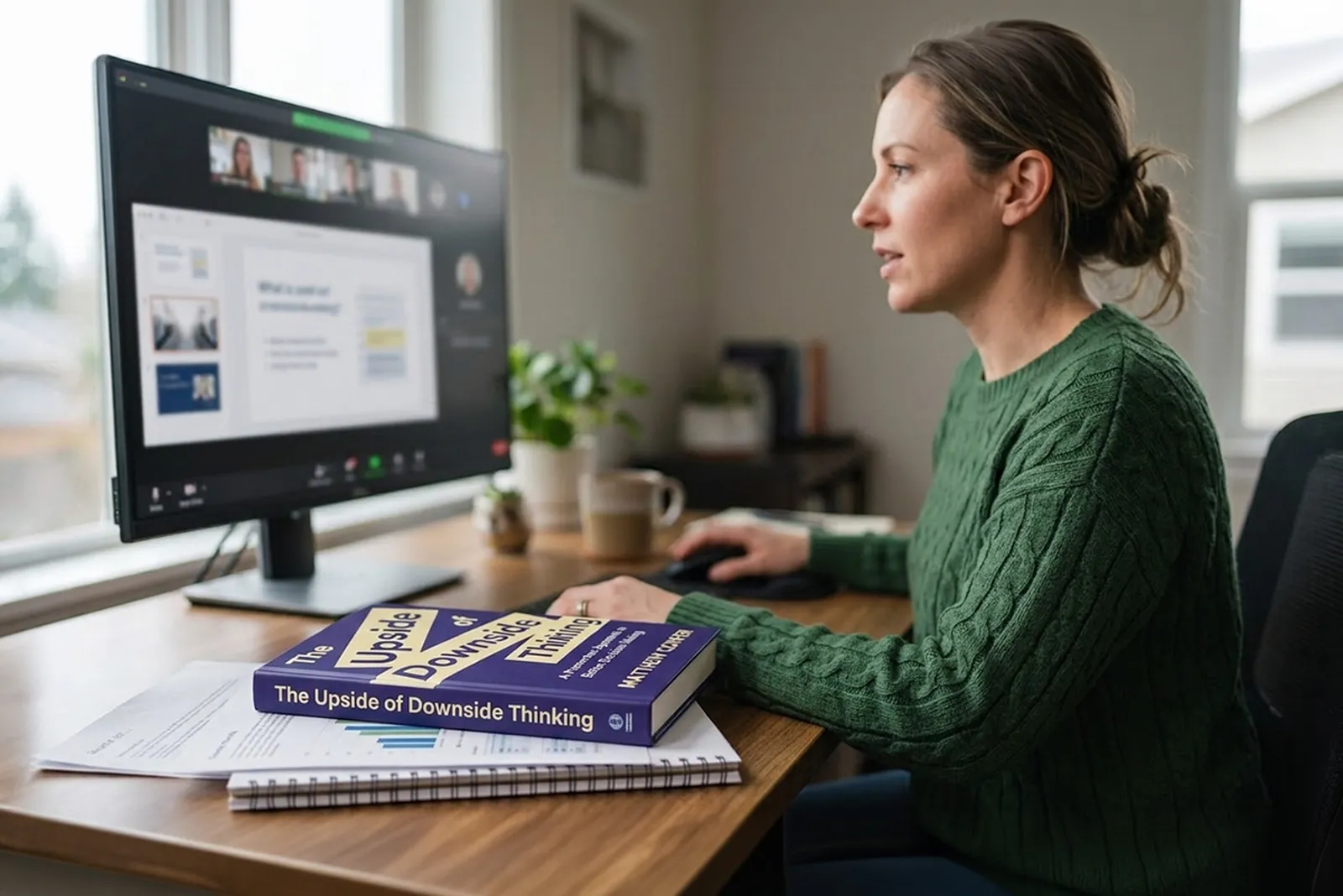
My hope is that The Upside of Downside Thinking: A Premortem Approach to Better Decision Making gives leaders and teams a practical way to do exactly that.
Not to eliminate uncertainty. Not to guarantee success. Just to make better decisions while there is still time to change them.
And for those of us in L&D, I think that is the larger opportunity. We are not just helping leaders learn from what already happened. We can help them develop the habits that let them see more clearly before they act.
If you want your leaders practicing decisions like these before the stakes are real, that is what our leadership simulations are built for. Book time with the Abilitie team and we can talk through the leadership challenges your people are facing.
The Upside of Downside Thinking: A Premortem Approach to Better Decision Making will be published by ATD Press and available on Amazon.